


Jotform logo

Job application

Senior Frontend DeveloperIzmir/Turkey

Jotform-focused application study

Orhan Özkerçin

Frontend developer based in Izmir, Turkey, with nearly six years of industry experience. Has worked with different frameworks and teams, with practical exposure to how technical decisions and human collaboration shape real products. Values adapting to change, facing technical challenges, and continuing to grow as a developer in an AI-shaped software world.

Based in Izmir and open to relocating to Ankara (Izmir is preferred).
Experience across different teams and product types.
Uses AI as part of development and learning workflows.
Comfortable adapting to change and facing technical challenges.
Focused on clear, usable frontend interfaces shaped by real product needs.
Values team communication, code review, and shared technical understanding.

Product experience

Products and surfaces I've worked on

Esim.io

Second Teknasyon project, focused on an eSIM purchase experience. The role strengthened my product-side thinking as much as my frontend implementation: working closer with product teams, following product signals, and turning observations into possible actions.

  • I worked mainly with Next.js, TypeScript, and Tailwind CSS.
  • I helped move the frontend toward healthier Next.js patterns after an initial implementation that did not follow recommended framework practices.
  • I reviewed and refactored server-client flow, frontend state ownership, and logic boundaries.
  • I handled cross-team communication where backend-managed frontend logic needed to be moved, clarified, or adjusted.
  • I researched and contributed to SEO, PageSpeed, image optimization, loading behavior, and product-facing improvements.
  • I developed a stronger product mindset beyond only writing UI code.
Nesine.com

High-traffic React product experience in a frontend monorepo during a migration from legacy .NET surfaces to a React SPA. I followed existing product patterns while being careful about performance in a production environment.

  • I worked with plain React without a meta framework.
  • I contributed to converting legacy product areas into React SPA screens.
  • I spent focused time on React performance topics because of the product's traffic scale.
  • I practiced virtual list usage, re-render debugging, profiler usage, key handling, props behavior, and component update analysis.
  • I worked specifically on performance-related improvements around the Kupondas tab.
  • I followed established monorepo patterns and production conventions.

Datapad

Startup experience in a data-focused product, chosen deliberately to experience a faster, higher-pressure environment. I did technical work as well as more direct product decision-making under uncertainty.

  • I worked with Next.js, TypeScript, and Tailwind CSS.
  • I built data-heavy product surfaces connected to multiple external sources.
  • I worked on interfaces for understanding, tracking, and presenting user data.
  • I experienced startup dynamics, pressure, fast product decisions, and the cost of failed assumptions.
  • I contributed briefly to backend development as well as frontend work.
  • I left the project together with the team due to the economic conditions affecting the startup.

Rockads

First Teknasyon project, initially shaped as a dashboard and later pivoted into an advertising management center. I worked on integrations, charts, and a framework migration inside an evolving product direction.

  • I worked with Vue 2, Vue 3, TypeScript, and SCSS.
  • I joined the team during the Vue 2 to Vue 3 transition.
  • I worked on integrations with advertising platforms and their management panels.
  • I improved documentation-reading habits while integrating third-party platform behavior.
  • I spent significant time with chart libraries and dashboard-style data presentation.
  • I experienced a product pivot from dashboard concept to advertising management center.

Petal Maps Studio

Enterprise product built around Huawei's Petal Maps map engine, allowing enterprise customers to create map-based experiences for their own users. In this early-career role I worked on complex UI behavior, state management, and perceived performance challenges.

  • I worked with Vue 2 and Less.
  • I built dashboard-like UI flows around map customization and map-engine communication.
  • I connected selected HTML/interface elements with map-engine behavior.
  • I solved state-management problems around complex map-related interactions.
  • I worked through heavy performance and response-time challenges from the map engine.
  • I used creative UX techniques to reduce the perceived waiting time during loading or frozen response states.

Amatis

Early career experience at an Izmir-based company, starting as an intern and continuing as a frontend developer. I worked on a product that visualized ECG data from a healthcare organization and presented it to healthcare professionals and related teams.

  • I worked with Angular 2+, TypeScript, and plain CSS.
  • I built dashboard-style healthcare data visualization surfaces.
  • I worked on presenting ECG-related data in a usable format for professional users.
  • I gained first professional experience with TypeScript and structured frontend development.
  • I started as an intern and continued contributing after the internship period.

Talks & teaching

Meetups, trainings, and recorded sessions

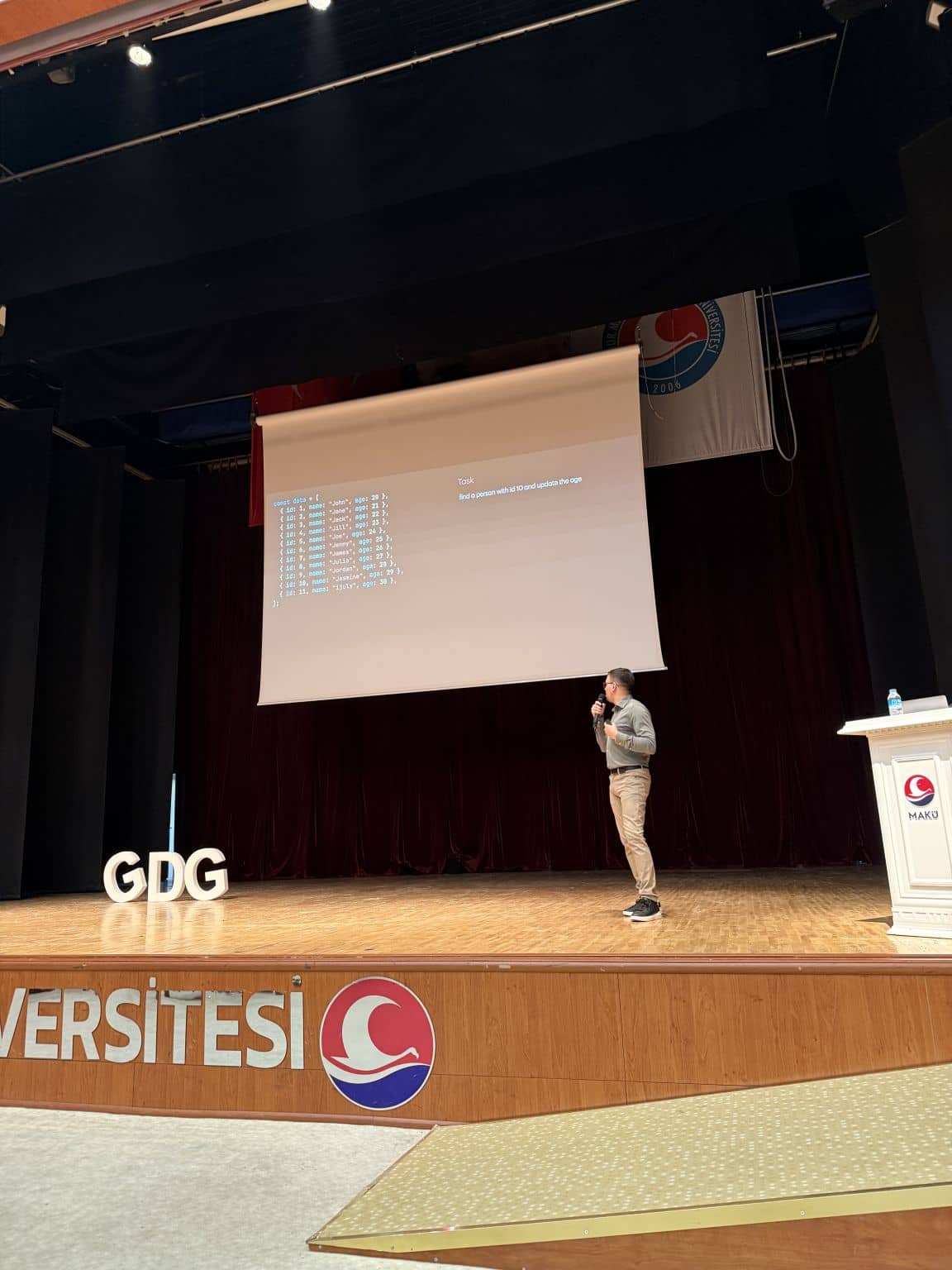
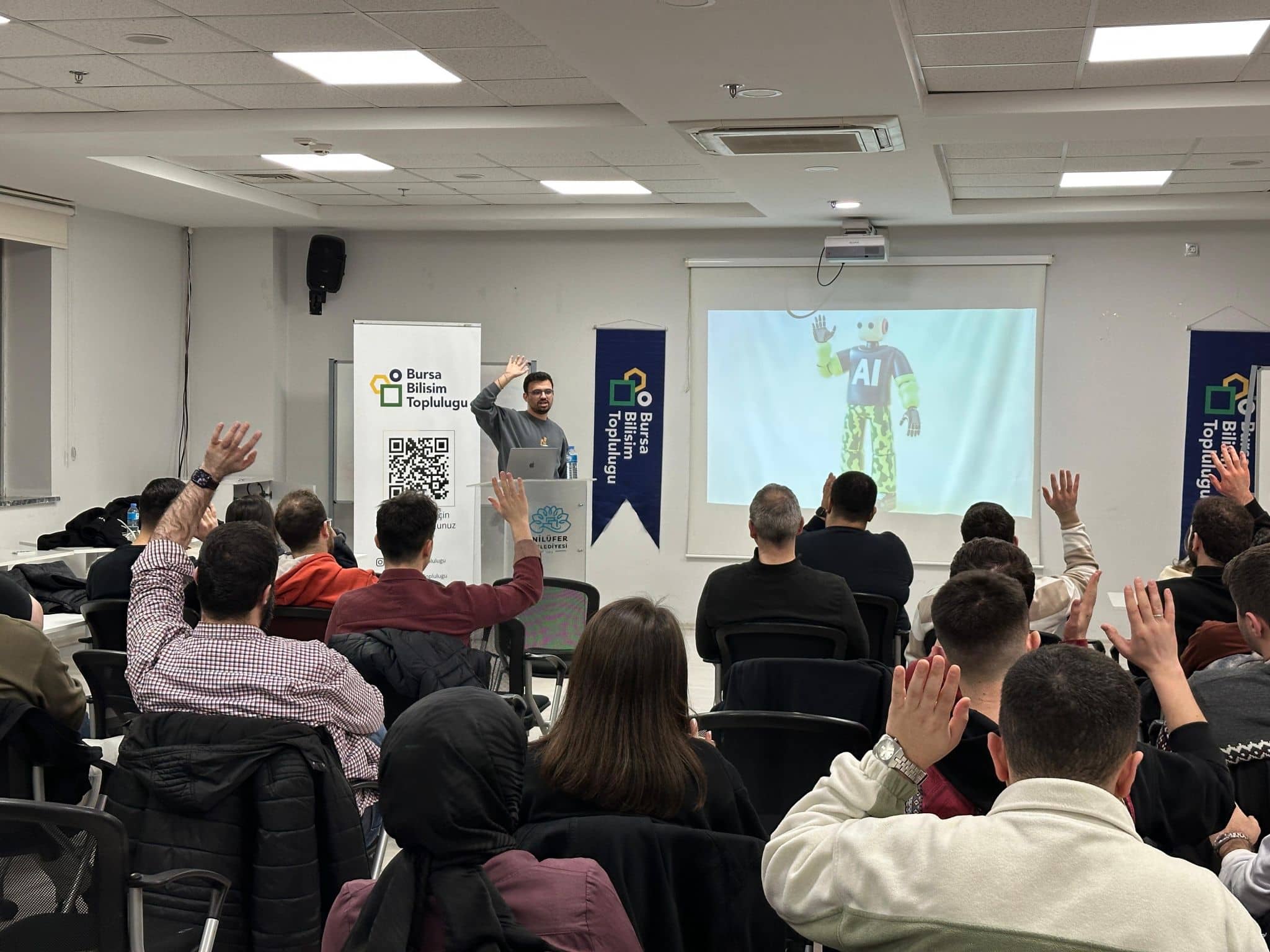
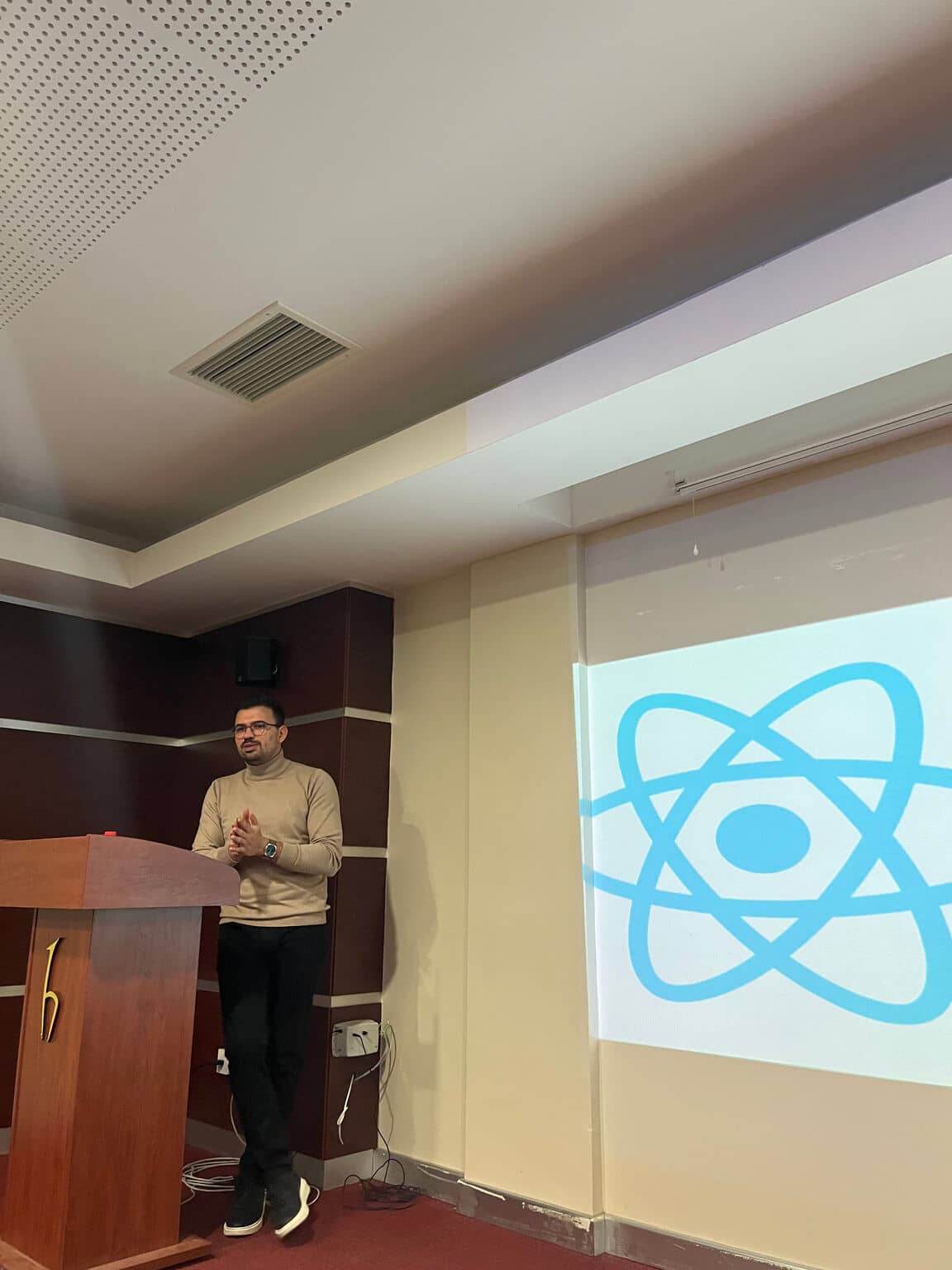
Alongside product work, I've given talks and learning sessions on frontend topics—data structures, Web Vitals and performance measurement, Next.js, and JavaScript fundamentals—with public recordings and event photography below.

Recorded sessions

YouTube

Veri Yapıları Nelerdir ve Neden Bu Kadar Çoklar? — Meetup #21

What are Core Web Vitals, and how can you measure a good web application?

Next.js: Am I Still a Frontend Developer? — Meetup #48

Random Ship 2: JavaScript Behind The Scenes

JavaScript Behind The Scenes — speaker session

Long-form session — playback from 1:03:50 (embedded start time)

Web Vitals - İyi Bir Uygulamayı Analiz Etmek

Her Açıdan Angular: Class Decorators

On stage and events

Photo gallery
On stage at DevFest Ankara
DevFest Ankara
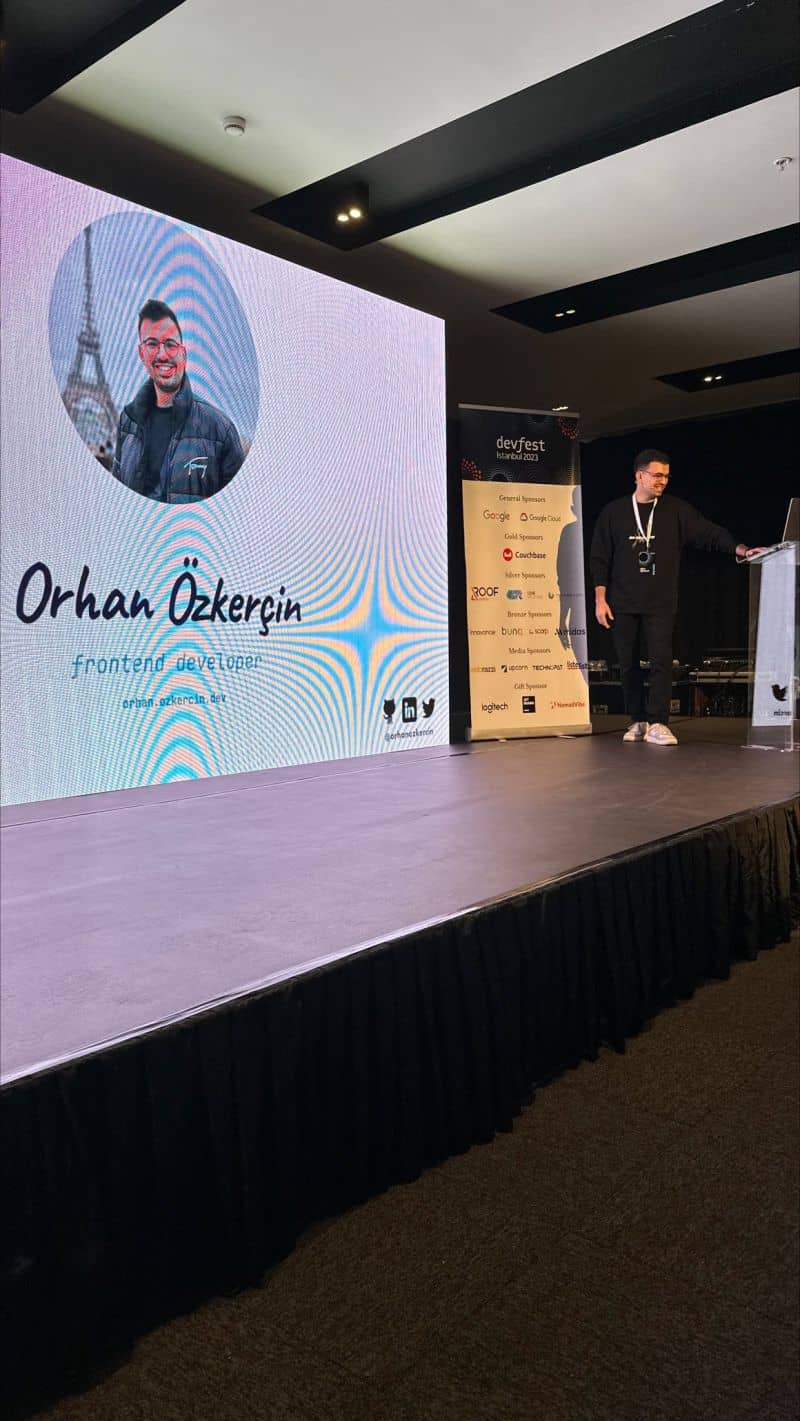
Speaking at DevFest Istanbul
DevFest Istanbul
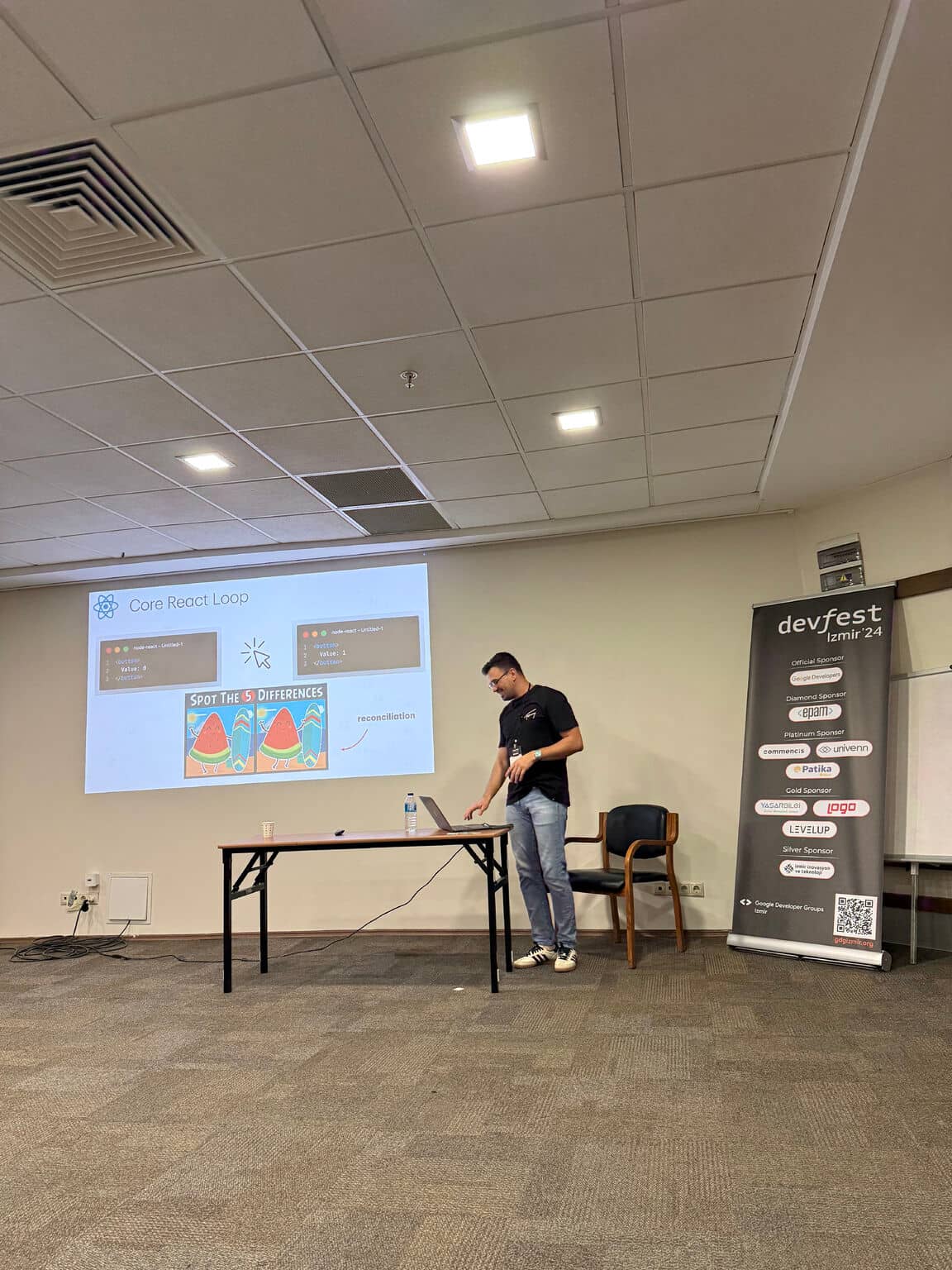
Speaking at DevFest Izmir
DevFest Izmir
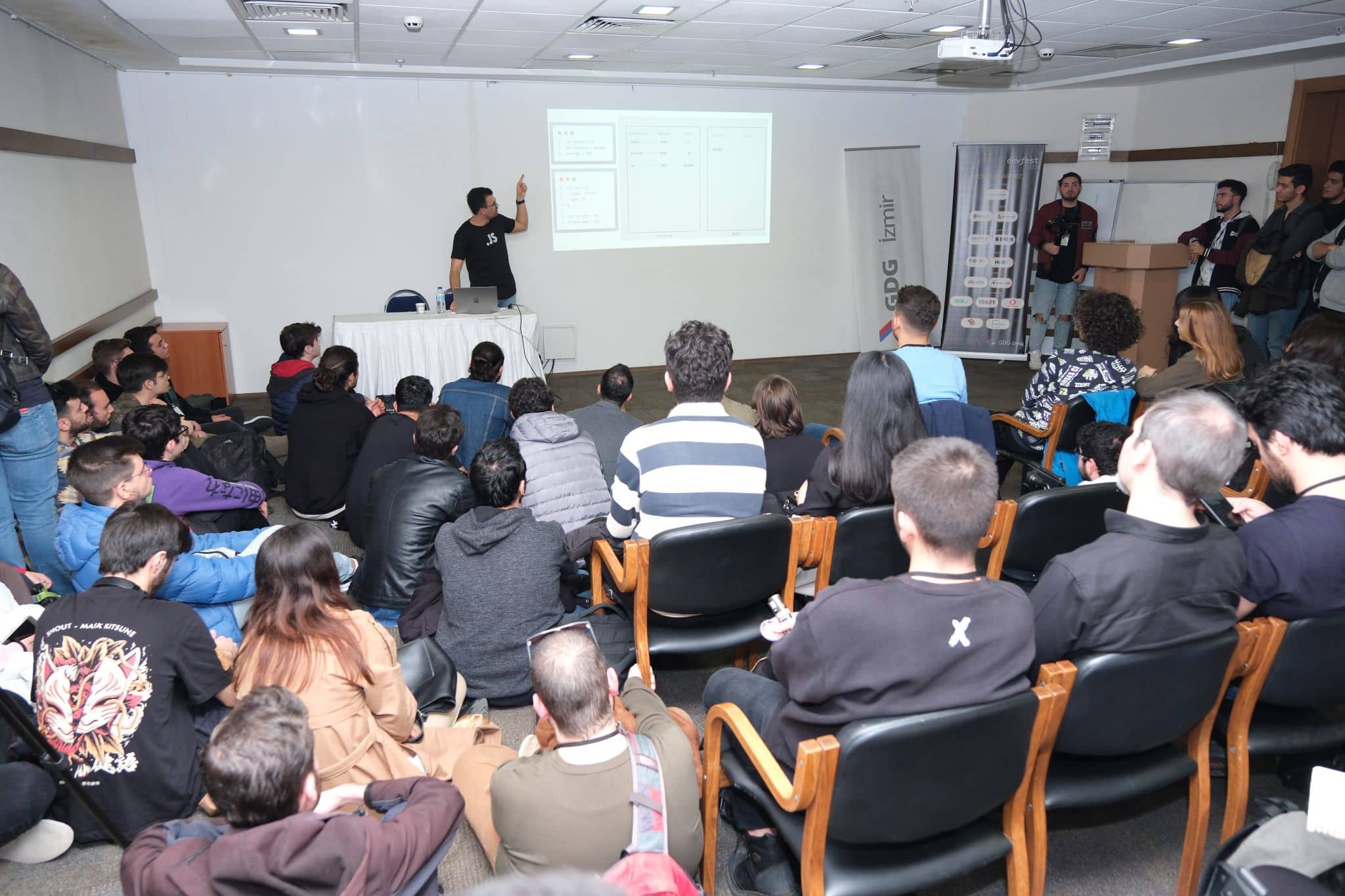
Presenting at DevFest Izmir
DevFest Izmir
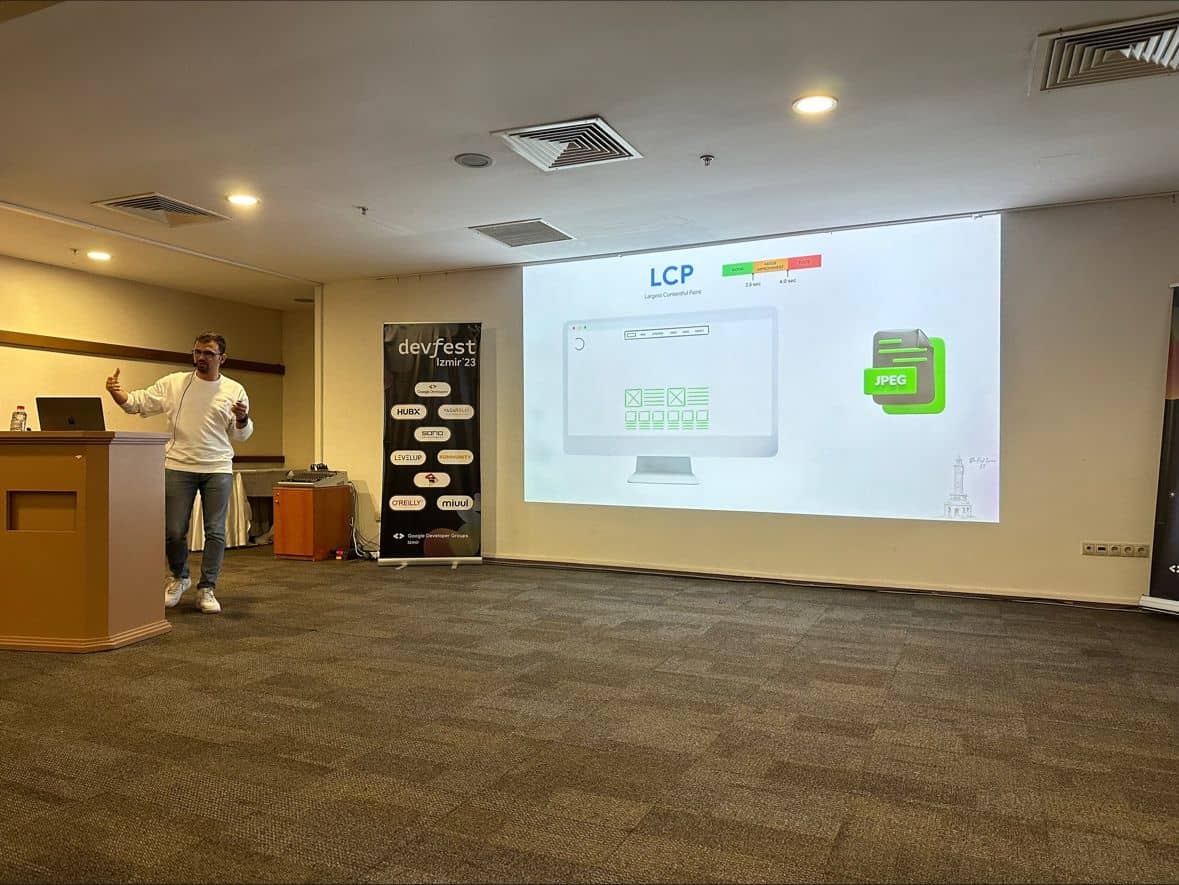
Talk on Largest Contentful Paint and performance
DevFest Izmir
Presenting at an event in Burdur
Devfest Burdur
Speaking at a Bursa Bilişim Topluluğu event
Bursa Bilişim Topluluğu

Session posters

Thumbnails
Talk poster: Bakırçay University
Bakırçay University
Talk poster: Bilişim Günleri
Bilişim Günleri
Talk poster: DevFest Eskişehir
DevFest Eskişehir
Talk poster: DevFest Istanbul
DevFest Istanbul
Talk poster: DevFest Izmir
DevFest Izmir
Talk poster: Junior Konf
Junior Konf
Talk poster: Kış Kardeş
Kış Kardeş
Talk poster: Ng Turkey
Ng Turkey
Talk poster: SistersLab
SistersLab
Talk poster: Tech Talks
Tech Talks
Talk poster: Tech4Youth
Tech4Youth
Talk poster: Teknasyon Talks
Teknasyon Talks

I'm including these visuals and videos so you can see what I work on around the topics I care about and how I explain things when I present them.

Role fit

Where my experience overlaps with Jotform's frontend challenges

Frontend-heavy products, cross-surface flows, and mixed-age code

Jotform's surface spans many user paths and products, with likely legacy alongside newer work. I've shipped in several different production codebases and teams, which usually helps me ramp on unfamiliar patterns, stabilize older areas, and still ship.

AI-driven product direction

Jotform is prioritizing AI transformation across the product. I already use AI heavily in day-to-day development and learning, and I want to contribute ideas where AI changes how builders and end users work—not only as a consumer of tools.

Many apps, varied stacks, pragmatic adoption

The company operates many frontend-heavy applications with diverse technologies. I'm motivated to pick up unfamiliar stacks and tooling; my background spans Angular, Vue, and React-heavy products, and I treat new constraints as ordinary product work.

Performance and user-perceived quality

Jotform's public UX suggests a disciplined eye for speed, clarity, and polish. I've worked on high-traffic React surfaces and Next.js pages where PageSpeed and loading behavior matter, and I care about perceived quality in UI implementation and review.

What I've looked into

What I've learned about Jotform—and what was already familiar from similar product challenges

Observation

Jotform is no longer only about forms; it now spans workflows, apps, documents, e-signatures, integrations, and AI agents.

That makes the frontend surface a complex product system where clarity, state, permissions, and progressive disclosure matter as much as visual polish.

Observation

Conversational help repeats across overlapping products—notably AI chatbots and Jotform AI Agents—with similar onboarding and FAQ-style jobs. Noupe belongs in that same family when it comes up, but it shouldn't carry the storyline by itself.

For frontend, the hard part is making AI feel useful, branded, trustworthy, responsive, and easy to control rather than just conversational—the pattern matters more than any single SKU name.

Observation

Jotform appears careful about image loading and performance details: lazy loading, blurred initial image states, and download-on-scroll behavior.

That reinforces a broader performance bar—including fundamentals that compound with heavier client UI, where disciplined React rendering and profiling also tend to matter.

Observation

From browsing and public positioning, the product footprint looks intensely frontend-heavy: builders, workspaces, and embed-heavy flows where React performance and cohesive UI conventions are easy to rationalize.

Public-facing engineering signals consistently point toward React with TypeScript, an internal design system, and reusable patterns—including extensive custom hooks. That reads like a codebase where UI architecture and conventions are everyday work—not one-off widgets.

Observation

Security and accessibility show up repeatedly as credible product stakes. Iframes and embed seams look meaningful—likely intertwined with isolation, trust, and safer integration patterns for third-party contexts.

SSR does not appear uniformly dominant on every sampled surface I've looked at; that can shift responsibility toward client-rendered React and toward making secure, accessible UX legible—not only shiny features.

Observation

Enterprise, security, accessibility, integrations, and compliance are visible parts of Jotform's product story.

Frontend clarity becomes part of trust: users need to understand what data is collected, where it goes, and what actions are safe.